• Skip to primary navigation
  • Skip to main content

ABF.

Research Advancing Justice

  • Facebook
  • Twitter
  • YouTube
  • ABF Fellows
  • Donate
  • Research
    • Research
      • Learning and Practicing Law
      • Protecting Rights and Accessing Justice
      • Making and Implementing Law
      • See Recent Research
    • Other Work
      • ABF Newsletter: Researching Law
      • ABF Podcast: Whose Law is it Anyway?
      • Access to Justice Research Initiative
      • Law & Social Inquiry
      • Featured Researcher
  • People
  • Programs
    • Faculty Scholars
    • Postdoctoral Fellowships
    • Doctoral Fellowships
    • Undergraduate Fellowships
  • Giving
    • Impact Funds
      • The Ruth Bader Ginsburg Endowed Fund for Research in Civil Rights and Gender Equality
      • The William C. Hubbard Law & Education Conference Endowment
      • The William H. Neukom Fellows Campaign for a Research Chair in Diversity and Law
    • Donate
      • Leave a Legacy
      • Qualified Charitable Distribution (QCD)
  • News & Events
  • About
    • Board of Directors
  • ABF Fellows
  • Donate
  • FacebookTwitterYouTube
Home > Fellows > David A. Collins, Philanthropist Fellow, Quoted in Supreme Court Opinion

David A. Collins, Philanthropist Fellow, Quoted in Supreme Court Opinion

July 28, 2026

David A. Collins, Philanthropist Fellow and former ABF Board President, had his Ph.D. dissertation quoted by Justice Amy Coney Barrett in her recent opinion for the court majority in the SCOTUS case of Watson v. Republican National Committee. The dissertation is titled “Absentee Soldier Voting in Civil War Law and Politics.” The Watson court ruled that states do not violate the federal Election Day law when their election laws permit mail-in ballots postmarked by Election Day to be counted even if they are received after Election Day.
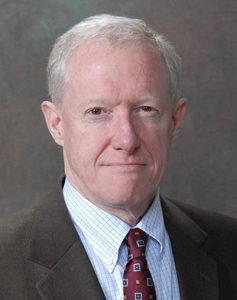
The dissertation examined legal conflicts that arose from twenty northern states changing election laws during the Civil War to permit absent soldiers to vote from their military encampments. Absentee voting was a radical innovation at the time, and it triggered state-by-state constitutional challenges.  Plaintiffs argued, based on historical practice, that the original public meaning of the words “vote” and “election,” as used in 18th and 19th-century state constitutions, reflected the intent by the framers that all voting be in person, with ballots cast in the voters’ home community. The 2026 Watson case carried echoes of those Civil War arguments, with plaintiffs arguing that the federal Election Day laws implicitly bar the acceptance of absentee ballots received after Election Day. In Watson, SCOTUS turned back that challenge.

Collins served as president of the Board of the American Bar Foundation from 2014-2016. Now retired, he practiced law first as an in-house counsel for General Motors and then Of Counsel at Dykema Gossett. It was relatively late in his legal career that he turned his amateur interest in American history into a program of graduate studies at Wayne State University, where he took night courses and eventually earned a PhD.

Read the opinion here and find the dissertation here.

Tags: Fellows, Fellows in the News

  • About
  • People
  • Careers
  • For Media
  • Logos & Colors
  • Annual Report
    • Form 990
  • ABF Fellows
  • Research
  • Learning and Practicing Law
  • Protecting Rights and Accessing Justice
  • Making and Implementing Law
  • Other Work
  • ABF Newsletter: Researching Law
  • ABF Podcast: Whose Law is it Anyway?
  • Access to Justice Research Initiative
  • Law & Social Inquiry
  • Programs
  • Faculty Scholars
  • Postdoctoral Fellowships
  • Doctoral Fellowships
  • Undergraduate Fellowships
  • Giving
  • Impact Funds
  • Leave a Legacy
  • News & Events

Sign up for ABF News:

  • This field is for validation purposes and should be left unchanged.
  • Facebook
  • X
  • YouTube
Logo
Research Advancing Justice
  • Contact Us
  • Contact the Fellows
  • For Media
  • Privacy Policy
American Bar Foundation
750 North Lake Shore Drive, Fl. 4, Chicago, IL 60611-4557
© 2026 American Bar Foundation
Any opinions, findings, and conclusions or recommendations expressed in ABF publications are those of the author(s) and do not necessarily reflect the views of the American Bar Foundation or the American Bar Association. The AMERICAN BAR FOUNDATION, ABF, and related seal trademarks as used by the American Bar Foundation are owned by the American Bar Association and used under license.