
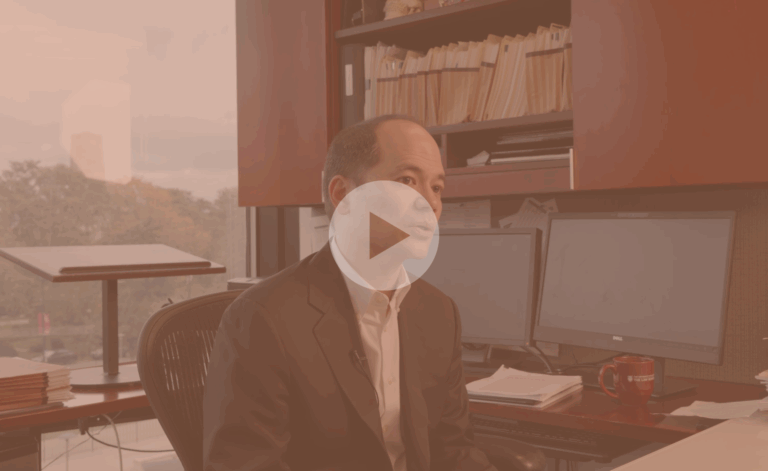
While market-based approaches to court procedures—particularly in civil cases—are often perceived as hindering access to justice, American Bar Foundation Research Professor and Deputy Dean and the Clifton R. Musser Professor of Law and Economics at the University of Chicago Professor William H. J. Hubbard poses a different question: Are there ways market forces can be used to make civil justice systems work more fairly and efficiently? With his extensive background studying both economic markets and the legal system, Hubbard is uniquely positioned to translate this question into practicable, evidence-based solutions.
In a recent interview with the ABF, Hubbard explains that the accumulation of civil procedural rules over nearly one hundred years—while often well-intentioned to safeguard fairness and due process—has produced unintended consequences. As rules proliferated, so too have costs, delays, and the strategic complexity of litigation. These burdens also fall disproportionately on litigants with limited resources, who may be unable to navigate dense procedural landscapes. As a result, procedural rules intended to safeguard fairness may instead deepen inequality within the legal system—a phenomenon Hubbard and Ronen Avraham call the “paradox of procedure.”