
The American Bar Foundation’s Access to Justice Research Initiative is a hub for innovative research that connects access to civil justice scholarship, policy, and practice. It aims to advance civil justice research, support empirical studies that deepen understanding, and serve as a resource for researchers, policymakers, and practitioners addressing unmet legal needs.
With support from The JPB Foundation, ABF has launched the Access to Justice Research Initiative Early Career Workshop. This program offers early-stage researchers opportunities for professional development, mentorship, and scholarly feedback within a community of engaged peers.
Participants will participate in monthly workshops with fellow members of their cohort, focused on providing feedback on work shared by members of the group and conversations about relevant professional development topics. Participants in this year’s cohort will also receive a research stipend and attend a two-day, in-person workshop.
“Our first cohort showed the positive impact of an intellectual home designed for early-career scholars studying access to justice,” said Rebecca L. Sandefur, ABF Faculty Fellow and Founding Director of the Access to Justice Research Initiative. “Supported through mentorship and collaboration, participants sharpened their research, built robust networks, and contributed insights that resonate far beyond the academy. We are thrilled to build on that momentum by welcoming a new cohort of scholars exploring critical questions, including how Black and Latino communities are reshaping access to justice; how perceptions of court accessibility influence public support for legal remedies; and, how immigration and housing policy intersect with civil justice. Access to justice continues to be delayed and denied for so many in the United States. This research is helping to illuminate paths forward to justice for all.”
Meet the 2025–26 Early-Career Scholars:
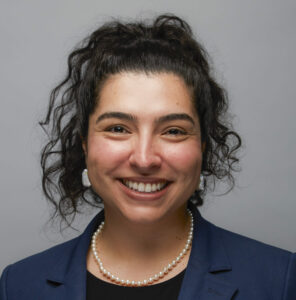 Elizabeth Barahona (she/her) is an Assistant Professor of Latinx History at Georgia State University. Her work focuses on Latinos in the United States, the American South, and cross-racial coalition building. She holds a PhD in History from Northwestern University. Her book manuscript, “Shared Struggle, Collective Power: Black and Latino Coalition Building in Durham, North Carolina, 1980-2010,” examines how grassroots alliances between Black and Latino communities emerged in response to shared challenges and ultimately reshaped the city’s political landscape. She also served as a curatorial fellow for Aquí en Chicago, the first major exhibition on Latino history at the Chicago History Museum, which opened in Fall 2025.

Lucia Lopez (she/her), JD, is a PhD candidate in Political Science at the University of Houston. Her research lies at the intersection of public opinion, public policy, and law, drawing on insights from political psychology to understand how policy design and misperceptions influence what people think about government programs (including the civil justice system) and about the people who benefit from them. She has conducted a national survey experiment to demonstrate how correcting misperceptions about the substantial effort required to pursue a civil claim increases perceptions of claimants’ deservingness and support for making the courts more accessible—an effect that is especially important in a political context where courts must hold powerful actors accountable.
 Matthew Nesvet (he/him) is a fellow and tutor in the Faculty of Law at Oxford University. His work focuses on how law and political economy figure health, housing, and environments. He is currently researching ways that advocacy, legal assistance, and rights-based approaches to social, economic, and political rights can be tailored to improve health, health-related social outcomes, and land and housing security. As an ABF/JPB Access to Justice Early-Career Scholar, Nesvet will research how civil legal aid and pro bono legal assistance are funded and operated, giving particular attention to the economy of legal rights and services for those in need, focusing on devising and experimentally testing new models for funding access to justice for people with unmet legal needs, particularly older adults living with disabilities and their care partners.
 Yutong Si (she/her) is an Associate Research Scientist at Columbia University’s Mailman School of Public Health. She received her PhD in Public Policy from Northeastern University. With a primary focus on energy and environmental policy, she applies computational social science methods to large-scale text and network data (e.g., social media posts). Specifically, she studies narratives (broadly defined) and networks to examine how policy actors frame problems, advocate for solutions, shift strategies over time, and shape policy outcomes, with the goal of generating data-driven insights for more inclusive and equitable policymaking. As an Access to Justice Early-Career Scholar, Si is examining electricity rate case dockets to assess how institutional design shapes procedural justice.
 Phi Hong Su (she/her) is an Assistant Professor of Sociology at Williams College. She is interested in people on the move and the understandings and convictions they carry with them across borders. Her book, The Border Within: Vietnamese Migrants Transforming Ethnic Nationalism in Berlin, best captures her concern with how people rebuild their lives after war and border crossings. Her current research centers on how community-based actors adapt to a rapidly changing landscape of immigration policy. Su’s project examines an emerging strategy for expanding immigration legal services. It traces how non-attorney legal advocates acquire, interpret, and deploy legal expertise amid shifting policies.

Chloé Sudduth is a PhD candidate at Rutgers School of Criminal Justice whose work sits at the intersection of digital technologies, law, and punishment. She studies the ways that Big Data, algorithmic systems, and criminal legal logics operate to expand punishment beyond the criminal legal system and shape power in contemporary society. Her dissertation explores algorithmic tenant screening systems in the private rental housing market as both technical infrastructures and cultural artifacts. Sudduth’s research interests are deeply tied to her prior work and experiences as an advocate and organizer. Sudduth’s research project explores algorithmic tenant screening systems as a case of algorithmic decision-making that advances humanistic and interpretive approaches to understanding algorithmic governance.
###
About the American Bar Foundation
The American Bar Foundation (ABF) is the world’s leading research institute for the empirical and interdisciplinary study of law. The ABF seeks to expand knowledge and advance justice through innovative, interdisciplinary, and rigorous empirical research on law, legal processes, and legal institutions. To further this mission the ABF will produce timely, cutting-edge research of the highest quality to inform and guide the legal profession, the academy, and society in the United States and internationally. The ABF’s primary funding is provided by the American Bar Endowment and the Fellows of The American Bar Foundation